Bold & Strong: Coffee Chat with Motherscope Founder Jackie Leonard

B8A00FC7-E679-4B9F-806E-EA4127E11FCD

Jackie Leonard is a mother, wife, teacher, and writer. She is also the founder and editor of Motherscope magazine, a California based literary magazine written by and for mothers. Each issue of Motherscope has a theme, and the first issue, quite fittingly, is dedicated to birth stories (read some here). 

I met Jackie virtually when an essay of mine was accepted for Motherscope’s second issue on the topic of choice in motherhood. I have contributed pieces to many anthologies and magazines throughout the years, but I have never devoured one as quickly and thoroughly as I did my issue of Motherscope when it arrived, wrapped in a beautiful bundle. 

Speaking of bundles…Jackie, a coffee and tea lover, is limiting herself to one cup of coffee per day during pregnancy. Sometimes she even skips days, but not today!

Fill your mug with your favorite beverage and join Jackie and me as we sip our drinks and chat about the importance of sharing stories, why she is a great mom, and her relationship with motherhood and writing. 

Me: In the Dec. 2019 Issue of Motherscope, you mention that the magazine began because of a Facebook message. Could you talk a little about that?

Jackie: Sure! Early in my first pregnancy, I felt an impulse to return to writing, to find a deeper purpose beyond the routine of my life — I was working as a paralegal again, after realizing that teaching high school wasn’t my path, and had recently attended the 2017 Women’s March in Los Angeles. I wanted more, but wasn’t sure what. My pregnancy amped that urgency because I was so fearful that motherhood would change me in ways I didn’t like, that I’d lose even more of myself for the sake of my child.

When I learned that a couple women I knew were also early into their first pregnancies, I decided to reach out to them via Facebook messages. At the time, they were acquaintances, women I’d known from previous circles, but had lost touch with. I attribute this decision, and the relationships that blossomed between myself and these women individually, with the eventual formation of Motherscope.

Throughout our pregnancies, and into motherhood, I’ve corresponded with and gotten very close to both these women. We have a bond that didn’t exist before because we connected so deeply by sharing our own experiences with one another. There were things we related to and were experiencing alongside one another, but there were also differences that we each benefited from learning about and supporting each other. This experience helped me hold onto myself through motherhood, and continue to nurture my own needs. My motherhood experience felt so different than what I expected, and what I’d seen on television, in movies, read about, witnessed. Having other women to share with showed me that motherhood looks so different from person to person, and there are so many stories and voices that go unheard.

I know not every woman has those opportunities for personal connections with other mothers, or may struggle to find their community. The magazine became a way to help women find themselves and share their stories of motherhood with others, to give women the opportunity to read and listen to stories they may relate to, or learn from those they don’t. 

Me: Describe how you felt when Motherscope’s first issue was published.

Jackie: I definitely felt the overwhelming wave of pride when I finally allowed myself to sit down and take in the variety of stories I’d gathered from all across the world. I remember having this moment where I asked myself how I even managed to get these. It had taken me nearly a year of asking people I knew, sending out calls for submissions, reaching out to listservs to share the opportunity with the mailing lists, and for a long time, there was silence, and very little traction.

Once I started putting the issue together, it took me a long time still to feel like it was finished. I was so worried about having a major typo that I missed that I wouldn’t find until after ordering the large print run. I ended up ordering two separate proofs and continued to find things to tweak and correct. I finally had to make the call that it was done and order a 50 book run, only to receive poorly printed covers! 

Eventually, everything got squared away and corrected. We had a wonderful launch party for the first issue, and I got to celebrate then. By that time, it had been over a year of searching, editing, production and waiting. To have that final product at the end of all that was very fulfilling — but I was also ready to move onto the next issue by that point too! The cycle continued, but I noticed the second time around, things went much more smoothly, and I felt even more satisfaction and accomplishment. I think in the back of my head, I was worried I’d only really be able to create one issue. The second one affirmed what I’d created was resonating and growing.

Me: Did you always want to be a mother? 

Jackie: As a child, I think I always assumed I’d be a mother one day. It was the sort of thing I didn’t really question, and as a teen, I thought I’d have kids by my early twenties. In early adulthood, my perspective and world expanded, and I think that led to years of not really seeing myself becoming a mother to eventually not thinking I wanted to be one. As I shared earlier, I held onto this fear and belief that becoming a mother meant losing a part of myself. I didn’t think motherhood was worth sacrificing my ambitions and dreams. I didn’t want to resent my child for holding me back. And, I also didn’t know that I’d meet someone that I wanted and trusted enough to have children with.

Early into dating my husband, I scared myself a bit realizing that I could see myself having children with him, something I’d never felt before. For a while still, neither of us were sure we truly wanted children. To be honest, there was a lot of uncertainty still even after we eventually decided that we wanted to start a family. But we took the chance and it has completely transformed everything for us in such beautiful ways.

Motherhood has enhanced my life, it’s been so healing, filled my days with depth, joy, love. It is such a gift to be my son’s mother. Being a mom lit me on fire and has challenged me greater than anything else I’ve ever experienced. It’s made me fight harder and work harder for myself, for my child, for my family. I’ve learned so much about myself and the world along the way.

Me: How do you balance writing and motherhood?

Jackie: I’m not sure there’s a balance between writing and motherhood. I will say that motherhood reconnected me with writing, which really feels like reconnecting with myself. I find that being a mother, spending so much of my mental and physical energy caring for a little human, makes me yearn for the outlet to write so much more. I know writing makes me feel better, it helps me connect with myself when I feel like all I’ve done all day is feed, clean, and talk to a toddler. It allows me to feel creative, embrace inspiration, and document the fleeting moments I get to witness through the eyes of my child and from my vantage point. I can’t call it balanced because it isn’t consistent, and I don’t have a regime that has stuck for too long, especially when I am also teaching, leading and editing through most of my “free” time. But I can say that I’m writing much more since becoming a mom than I ever had in the previous ten years. 

One thing that has helped make it more accessible for me is setting reasonable expectations and making it a priority. If I’m having a tough day, I’ll make a point to sit down and write as soon as my son goes down for a nap or bed, even if I have other things I need or want to do. I’ll set a timer for five minutes. I tell the women in my workshop all the time, we all have five minutes a day that we can commit to some writing time if we want it. Usually, I end up writing for much longer, but the freedom in being able to be okay with, and feel accomplished by, just those five minutes of writing makes a big difference.

Me: What are some essential workspace items that you must have in order to write?

Jackie: Honestly, the only “essential” item for me is a tool to record my thoughts. I think the Notes app on your phone is such an asset especially for moms. In fact, one of the stories featured in Motherscope’s second issue was written by a mom entirely from her Notes app during a late night breastfeeding session. That’s really all you need. If you get inspired and you can’t write, I go so far as to say, record it with a voice memo. You can always transcribe later, but it is not likely guaranteed that you’ll remember what you wanted to say if you wait for a paper and pencil.

That said, I definitely have a “writer’s toolkit” and routine that I like to utilize whenever I have the capacity to do so. I think setting the scene, making sure I’m relaxed and have taken care of certain things beforehand, are essential to a really fulfilling writing session. That can mean taking a bath, drinking some tea, going to a place in my home that I feel most comfortable, writing in a special journal, bringing in essential oils (a spray or diffuser). I really like to make it this therapeutic, ritual experience, especially if I’m trying to process something that’s upsetting or confusing, or document a moment. It makes writing feel like a treat, this real act of self care when I can make the time for it in this way.

Me: What makes you feel like you are doing a great job as a mom?

Jackie: When I feel like both his needs and my needs are being met. It doesn’t imply that there is balance on any given day, or even week, but that there is this ebb and flow that allows me to spend more time on myself and know he will be okay, and sometimes giving him more because he needs it and knowing that I can take care of what I want to do at a later time. I haven’t figured out the formula for this, but I know what it feels like when I’m there. 

This feels a little weird to say, but honestly, I feel like I’m doing a great job as a mom all the time. I think that is because I know that alongside parenting and caring for my son, being his mom, I’m also actively working on myself, making sure that I am the best version of myself that I can be. Because of this, I feel confident saying that on any given day, I’m doing the best I can, and I can tell my son is happy and cared for.

Me: Why is it important for women to share their birth stories? Stories about motherhood in general?

Jackie: A woman’s birth experience holds so much power. Think about what birth means to the woman who cannot have children, who has miscarried, who adopted, who was a surrogate, who had an abortion, who has experienced trauma… there are so many layers and versions of what a birth story can be and look like. 

For the most part, all we see about birth is a woman’s water breaking and rushing to the hospital, the sweating and pushing and cursing, and then a baby arrives. Other times, there’s a major emergency that involves rushing to surgery. Sure, some birth looks this way, but it is so overwhelmingly represented this way its no wonder there’s so much fear associated with it. 

I think birth is such a small moment in our motherhood experience, but it is also such a defining moment. It wasn’t that long ago that women were medically “knocked out” in hospitals, alone, and woke up to a new baby. Birth stories weren’t really a thing a couple generations ago in America, during the silent generation.

I’ve talked to lots of women who say they never really thought much about their birth experiences, or just have a few bullet points to say about it. I think that’s because we’ve never really celebrated the women in the birth experience. It’s all about the baby, and since the baby doesn’t really make an appearance until the end, everything that leads up to it, and even after, sort of doesn’t matter. But for any woman who has given birth, or witnessed a birth, or wanted that experience for herself, I think we can all attest to everything that led up to that moment, regardless of whether it was a vaginal birth, c-section, hospital or home birth. 

There’s research that suggests sharing birth stories with other women reduces fear about giving birth, less fear leads to better birth outcomes for mom and baby. Postpartum depression and anxiety disorders are correlated to difficult, traumatic birth experiences for mothers. There are physical, emotional, and mental benefits to sharing birth stories. I think this is why it is so so so important to create space and opportunities for women to write out and document their birth experiences, if only for themselves. And, if they feel open to it, to share them with others. 

I think a lot of the above applies to stories of motherhood in general as well. I’ve already said how varied motherhood is. It’s such an intersectional experience that isn’t documented enough. My mission with Motherscope is to continue to find ways to shine a light on the stories we don’t often hear. For women who naturally are drawn to writing (like me), I don’t worry about my story getting lost. But, I think of the women (like so many I know personally), who would never think to write or share their stories, no matter how fascinating, inspiring, brave they are. To share your stories of motherhood is to preserve yourself, to leave your imprint on this world, if for no one else but for your children, and those who will wish they asked and listened more when you are no longer here. 

Purchase an issue of Motherscope here.

I Love You More Than Coffee is now available!
 

Bold & Strong: Coffee Chat with Author Melissa Scholes Young

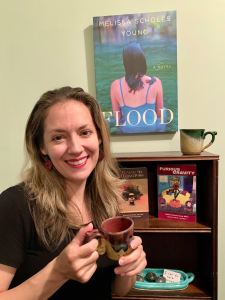
Melissa Scholes Young

by Melissa Face

This month I am thrilled to be chatting with Melissa Scholes Young, author of  Flood. I read Melissa’s debut novel this spring, and in addition to feeling very connected to her main character, I also loved the novel’s structure and its chapters that alternate the telling of Laura’s present story in Hannibal with Mark Twain’s past. 

Like her protagonist, Laura, Melissa hails from Hannibal, Missouri. And if you are a fan of Mark Twain’s work, then you already know Hannibal as the childhood home of Samuel Clemens. For the past decade, Melissa has taught creative writing at American University in Washington, D.C., and she says Maryland is starting to feel a lot like home, too.

Home is a major theme in Melissa’s first novel, and we discuss it below. Fill your favorite mug and join us as we chat about hometown coffee spots, early writing experiences, and whether or not you can ever really go home again.

Me: What is your favorite coffee drink? Is coffee part of your regular writing routine? If Laura (from Flood) were joining us for coffee, what would she likely order?

Melissa: I drink espresso straight. No sugar. No foam. Sometimes a dash of milk. I’m a morning writer so yes, it’s me, two shots of espresso and a piece of crusty toast at my desk early. I take my dogs out for a walk after lunch and usually make another espresso to take back to my desk for the work of revision. Laura would probably order an iced tea. It’s not served sweet in the northern part of Missouri we’re both from, but tea gets sweeter as you head down the Mississippi River to the Arkansas border. 

Me: Where is the best place to get coffee in your hometown? What about the D.C. area?

Melissa: In Hannibal, it’s Java Jive. It’s a favorite on Main Street down by the river: Java Jive.Everyone knows everyone and when I’m visiting my family, it might take an hour or more to get out of Java Jive from catching up with folks. My parents live way out in the country, but I’ll drive in town for a few shots of espresso from Java Jive. Also, Java Jive’s WiFi is strong and that’s not an easy thing to come by in my hometown. 

In D.C. I’m usually on campus, and we have two amazing student-run coffee shops: The Dav and The Bridge. I like seeing my students out of class and just hope they don’t have questions about their grades before I’m fully caffeinated. 

I also spend a lot of time in D.C. at bookstores. The Den at Politics & Prose Bookstore and Café serves a lavender Earl Grey tea that is a religious experience. 

Me: Describe your early writing life. When did you know you wanted to be a writer?

Melissa: I won my first writing contest in third grade. It was a prompt for Mother’s Day about why I had the best mom. I wrote I have the best mom in the world because I have the best dad in the world and the best dads pick the best moms. The end. The prize was a $10 gift certificate to the Ponderosa Steakhouse. I’ve been writing ever since. That someone paid me for my words at such an impressionable age was dangerous fuel indeed. 

I continue to write for the same reason students continue to show up in my writing class: we all want to be heard. We all have stories to tell. Our stories are always drafts. They are never done and we are always revising them. Even when I see my book on the shelf at my favorite independent bookstore, I resist the urge to get out my pen and fix a few things. I’m never quite satisfied and that is its own life lesson.

Me: Who are some of your favorite authors?

Melissa: Mark Twain seems obvious. I also love Abigail Thomas, Marilynne Robinson, Alice Munro, and Toni Morrison. I return to May Sarton’s journals and Rilke often. One of my literary heroines is Bobby Ann Mason. My favorite contemporary writers are Elizabeth Strout and Jesmyn Ward.


Me: I love the structure of Flood and the alternating chapters about Mark Twain. What was the process of writing Flood like for you? Did you feel like you were revisiting your past? Were you living in D.C. while you were writing it, and if so, did you return to Hannibal throughout the writing process?

Melissa: Thank you for asking about the structure. It took me years of failed attempts to finally succeed at weaving Laura’s present story with Twain’s past and share Hannibal’s history, too. It wasn’t just that I was revisiting the stories I’d been raised on, but I was also learning what was truth vs. myth. I started writing FLOOD when I was studying Creative Writing at the University of Southern Illinois in Carbondale. I finished it when I was in France on a fellowship. I visited Hannibal many times during the drafting and it was important to me to launch the book in my hometown. 

Me: What characteristics do you and Laura have in common? In what ways are you different?

Melissa: We both have aunts that adore us and best friends that know our secrets and keep them. We both love Hannibal, even if it’s a complicated relationship. We both have strong mamas and a legacy of tough women. Laura returns to our hometown and wrestles with her past to recalibrate her future. I left home at seventeen and have never lived there again. 

Me: Do you think it’s possible to “go home again”?

Melissa: It’s hard to go home again but mostly because you’ve changed. Home tends to stay the same but you’re seeing it through a different lens. When I was writing Flood, I wanted to wrestle with not just ‘can you go home again?’ but ‘what happens if you have to?’ Home has to take you back. Those are just the rules. 

Me: In one of the articles on your website, you mentioned that motherhood fueled your creative writing career. Could you speak a little about that? How do you balance the demands of a teaching and writing career with motherhood? (Balance is probably a bad word choice. So, if “juggle” fits better, go with that:)

Melissa: I do one thing at a time and often that means not everything gets done. If I’m with one of my daughters, I’m present. If I’m writing, I’m focused on the page. If I’m in a classroom, my students get my full attention. I do poorly when I spread myself too thin, and it’s my job to show my daughters how to value their own work and prioritize their time. Your family loves you, but they will not hand you blocks of uninterrupted writing time. You have to take it and not apologize. They’ll learn to root for you. They’ll learn to do their own laundry too. 

Me: What are some items that you must have in your writing space before you can begin?

Melissa: For the first time in my writing life, I have a desk, but I wrote most of Flood on a laptop desk in bed. I kept it tucked by my bedside and would quietly slip the desk and my computer or journal on it so I could write first thing in the morning before the kids woke up or discovered I’d stirred. Maybe that’s why it took me five years to finish it. 

My desk now is a sewing table my grandpa made for my grandma. At five foot two, I have a few inches on Grandma, so my mom screwed wooden dowels to the legs to raise it up for me when she delivered it to my office. I like thinking of the fierce do-it-yourself women who raised me when I write. They taught me to work hard and to finish what I start. 

Me: What are things that often distract you when you are writing?

Melissa: Research distracts and fuels me. I can spend an entire day learning about a bee keeping technique called ‘shimmering’ that adds exactly one sentence to my manuscript, but I still think it’s worth it. I studied history in college and I have a lot of questions about everything. 


Me: I like that as an instructor, you encourage students to embrace the notion of being undecided in terms of college majors and career paths. Can you talk more about your experience in taking different routes in education and in life, especially in terms of the benefits of life experience?

Melissa: I grew up in a small family business. We’re in the pest control industry. We kill bugs. I am the first in my family to earn a college degree, and I assumed I would study business. I accidentally ended up in a Russian Cultural History class and was stunned by poetry. I didn’t enjoy Accounting and I knew I’d be bored by a desk job. After college, I earned a Master’s in Education because I had tuition benefits with my first job. My first job teaching was in Brazil. Then I moved to Ohio, Connecticut, Florida, Illinois, and Washington, D.C. Each move was about earning degrees without debt. My husband and I took turns going to school and we moved wherever the other got a fellowship or assistantship. I was in my mid-thirties with babies when I decided to earn my MFA in creative writing. I think everything I’ve learned about taking risks, figuring things out as I go, and seeking creative solutions I learned from growing up in a small family business. Hard work, adaptability, pluck, and commitment. I encourage my students to get work experience to figure out not just makes them burn but also what doesn’t. I’m a big fan of stumbling onto a path that works. 

Me: Writing can often be a lonely practice that is filled with rejection. What do you think writers need to hear or remember to help them keep going?

Melissa: Rejection just means you’re playing the game. I get rejected all the time. I dust myself off and play again. If a story or an essay gets rejected a few times by editors I know and trust, I’ll pull it back for revision. Rejection is useful feedback if you can listen to it. But then, sometimes, I hit a home run and it’s amazing. 

Me:  Do you have another novel in the works?

Melissa: Yes! My next novel is THE HIVE and it’s due out June 2021. It’s the story of a family pest control business and the four sisters with their apocalyptic prepping mother who have to figure out succession and survival after their father’s sudden death. It’s like Little Women with bed bugs and bees.  

Me: Do you have any closing thoughts?

Melissa: I want readers to know I’m grateful. Stories matter. What we have to say matters. I get to tell stories for a living because of readers. It takes courage to put words on the page, and I’m deeply indebted to readers.  

Catch up with Melissa at her website, melissascholesyoung, or one of her social media handles below:

Twitter: @mscholesyoung

Insta: @melissascholesyoung

FB:  @melissascholesyoung


***I Love You More Than Coffee is available for preorder. Order your copy here.


Bold & Strong: Coffee Chat With Author Julie Valerie and Special Guest

MelissaCoffeeChatPhoto


By Melissa Face

Earlier this year, I virtually met Julie Valerie, author of Holly Banks Full of Angst (read here ) and The Peculiar Fate of Holly Banks (pre-order here), which will be released November 24, 2020. Julie and I initially connected when we were making plans to participate in a writing panel on motherhood. Even though the event didn’t happen this spring, Julie and I remained in touch. I read her debut novel, and I fell in love with her work and with her main character, Holly. 

Holly Banks is an adorably neurotic mom who moves with her family to a new town. She grapples with neighborhood drama, over-the-top school moms, family problems, and the change I related to most: sending her precious daughter off to school for the first time.

But there is no need for me to describe Holly any further when she and her creator are both here for coffee (and tea). Fill your mug, shush your kids, and join us as Julie, Holly, and I discuss some topics that are on the minds of many moms: self-acceptance, the fear of losing our identities, and the search for happiness.


Me: Are you a coffee drinker? If so, how do you take yours?


Julie: Actually, I’m a tea drinker in a coffee world. English Breakfast with two lumps of sugar, and I drink it all day long. Holly Banks, the main character in the collection of novels I write as part of the Village of Primm series, is a huge coffee drinker. In the first book, Holly Banks Full of Angst, she sniper crawls out of a PTA meeting while protecting a to-go cup of coffee she purchased before the PTA meeting from Primm’s Coffee Joe—the coffee shop in the Village of Primm where the series of books are set. In fact, she was late for the PTA meeting because she stopped for coffee.


Holly: Me? Oh, yeah, I love coffee. Vanilla hazelnut. Interesting fact: my husband, Jack, roasts a small batch of Honduran coffee beans in a popcorn popper in the second book, The Peculiar Fate of Holly Banks. And yes, I sniper crawled out of a PTA meeting. Trust me, I paid dearly for my actions . . .


Me: How many kids do you have and what are their ages? What do they call you? (mom, mommy, mama, etc.)


Julie: I have four kids (two girls and two boys), two dogs (both English Labradors—one yellow, one chocolate), and one husband (college sweetheart). My girls are in college, and my boys are 13 and 15. All of the kids call me mom, but my oldest still calls me mama from time to time. I love it when she calls me mama.


Holly: I have one child, a daughter, Ella, and she’s five and starting kindergarten in the first book which I find impossibly difficult to get used to. I miss her when she’s at school, and I’m struggling a bit trying to figure out my next steps. I studied filmmaking in college, and I’d like to get back into it, but I don’t quite know how. We’re newly moved to the Village of Primm, and I’m feeling a bit lost. Like Julie, I have a chocolate Labrador. Her name’s Struggle, and she gets into a lot of trouble in the second book. Digs up an old artifact in the village center, and the mishap draws the attention of local media. Ugh! Motherhood—and dogmotherhood. Never a dull moment.


Me: Do the two of you share any commonalities in terms of motherhood?


Julie: I’d say we’re both less-than-perfect moms searching for mostly happy in a pretty good life.


Holly: Sounds about right.


Me: Being a first-time mom is so incredibly challenging. What message would you like to send to new moms who might be struggling?


Julie: The best advice I can give a new mother is the same advice passengers on an airplane hear before take-off. “Should the cabin lose pressure, oxygen masks will drop from the overhead area. Please place the mask over your own mouth and nose before assisting others.”


Holly: Motherhood is incredibly challenging. I’m so full of angst, my state of mind made it into the title of the first novel: Holly Banks Full of Angst. My advice for any mom who may be struggling is the core message of that novel: self-acceptance. If you take a peek into that book’s pages, you’ll also find there’s more than one word for happy.


Me: Dangerous question alert: Are you the mom you imagined you would be? If not, how are you different?


Julie: I imagined I’d homeschool all of my children, but that never happened. Every time I pitched the idea, it got shot down.


Holly: I imagined I’d keep up with my art and love of filmmaking while Ella was young, but I got busy and lost myself to motherhood. I’m trying to find my way back to myself, but it’s hard.


Me: What do you consider some of your greatest parenting successes?


Julie: Despite all my parenting screwups, my kids are turning out to be awesome people. Not just a little bit, a lot. They are kind, thoughtful, have feet firmly planted, and they all possess a solid moral compass. I love hanging out with them.


Holly: My greatest parenting success? I got Ella on the school bus. Hey. You have no idea how difficult that was.


Me: Areas where you fall short?


Julie: Oh, geez. Where do I begin???


Holly: Me??? Good gravy, where do I begin? Let’s just say—if you’re a mom feeling you’re constantly falling short—spend a few hours with me, Holly Banks. Much of the first book explores a common feeling parents have—the fear of making mistakes that hurt or embarrass our children. One of the book club discussion questions asks: “To what degree is there a connection between a parent’s foibles and a child’s well-being?” I think Julie wrote that question after watching me muck-up Ella’s first week of kindergarten.


Julie: Another book club discussion question asks: “In what ways do moms strive to present themselves as perfect mothers to mask underlying flaws they hope no one will notice?” Feeling you’ve “fallen short” as a parent is a big theme in my novels. Probably because I so often feel that way myself.


Me: How do you balance work and motherhood? (lol!!)


Julie: By balance, do you mean writing your first novel between midnight and four o’clock in the morning while your family is asleep? Is that balance? No? No, I suppose it isn’t . . .


Holly: By balance, do you mean losing yourself entirely to motherhood while not nurturing a side of yourself you dearly miss? By balance, do you mean putting your child on the school bus for her first week of kindergarten and then finding yourself standing at the bus stop wondering: Who am I? What do I do now?


Me: If you could have coffee with another writer (living or deceased), whom would you choose and why?


Julie: A.A. Milne because Winnie-the-Pooh (1925) and The House at Pooh Corner (1928) changed my life. Also, I’d love to meet Menander, the Greek dramatist and best-known representative of Athenian New Comedy. He was born 342/41 BC and died in the year 290 BC. His legacy in comedy and satire so intrigues me I named a town after him in my Village of Primm novels.


Holly: I suppose I’d like to have coffee with tea-drinking Julie because she created me. I wonder if she’d know what I was about to say before I said it? Truth be told, I sometimes grab the reins and run off with the story leaving Julie running behind, waving her pen in the air and trying to catch up, shouting, “What the frick, Holly. Get back here!”


Julie: Ha! That never happens.


Holly: Like heck it doesn’t.


Me: What project are you currently working on?


Julie: With Holly Banks Full of Angst already on the shelves and The Peculiar Fate of Holly Banks releasing November 24, 2020, I’m working on my third novel.


 Holly: I hope I’m in it. Am I in it?


Julie: Of course you are.


Me: Anything else you would like readers to know about you? How to connect with you?


Julie: Melissa, thank you. We’ve had such a wonderful time chatting with you during your Bold & Strong Coffee Chat series. I’m on social media, but I think the best place to find me is my author website at julievalerie.com.


Holly: Yes, Melissa, thank you for having us for coffee. I had a super-duper great time! But Julie—I have to ask. Is that it? That’s all you have to say?


Julie: What?


Holly: You forgot to mention your author newsletter.


Julie: I have an author newsletter. 


Holly: Annnnnd??? Tell them how they can subscribe.


Julie: You can subscribe on my website at julievalerie.com/subscribe. Consider it your once-monthly “inside scoop” into my writing life and the world inside my books. I include glimpses of life inside the Village of Primm, character gossip, village happenings. That sort of thing.


Holly: Good job.


Julie: Thanks.


Holly: You’re welcome.


Julie: You can stop talking now.
Holly: Really, Julie? You’re the writer. You created me. You can make me stop talking whenev—


***I Love You More Than Coffee is available for pre-order here.

Bold & Strong: Coffee Chat With Dads Being Dudes – Michael & Weston

IMG_1607


By Melissa Face

I just began this blog series last month, titled it Coffee Chats With Moms, and I’m already veering away from that name. It’s for a great reason, though: it’s June, and it’s time to celebrate fatherhood! 

I was scrolling through Instagram when I first saw Dads Being Dudes. The logo caught my attention right away, and then I read their description. “Two dudes being new dads. Join our journey of parenting.” 

How cool! Parenting tips and support for new fathers! I had to know more, so I reached out to the founders of the Dads Being Dudes podcast, Michael and Weston, and asked if we could chat over coffee. They were almost as excited as I was! Here is what they had to say:


Me: What is your favorite coffee drink?

Michael: I eat pretty healthy, so during the week I just have my coffee black, no cream or sugar. However, if I splurge on the weekend then my favorite “cheat” coffee is an iced mocha with extra cream and sugar from Dunks.

Weston: My favorite coffee by far is a sweet vanilla cream cold brew from Starbucks.


Me: What gave you the idea for the Dads Being Dudes podcast, and how did you get started?

Michael: I’ve always wanted to start a business or a brand but could never figure out exactly what I wanted to do. I had the idea for a surfing podcast with one of my best friends, but he shot the idea down. Once I had the idea for a podcast in my head, the excitement took over and I wanted to start something ASAP. That led me to thinking about all the times I wanted to learn something about becoming a father but didn’t have the time to read. I started digging into dad podcasts but couldn’t find one I liked the vibe of, so I decided I should start my own. I pitched the idea to my best friend who is also a new dad and he was in. From there we got to work on the concept.


Me: How do you and your co-host know each other?

Michael: We actually met through our brothers. I was new in town and our two older brothers were in the same grade and became friends. They introduced us and ever since then we’ve been best friends. That was 16 years ago now.


Me: Did you always hope to be a father?

Michael: Yes, I did. My parents got divorced when I was in 3rd grade, and I didn’t talk to my dad for about 12 years. We have a great relationship now, but that missing link made me always want to be the best dad I could be.


Me: What are you most excited to teach/share with your child?

Weston: The thing I’m most excited to teach my son is sports, I think golf especially because that is also something you can do together and a sport you can play forever.


Me: What kind of dad do you want to be?

Weston: The kind of dad I want to be is the calm dad, doesn’t often get mad dad, and always around dad. I want to see my son grow and watch him do whatever he enjoys. My parents always came to my sporting events from little league to high school and that really meant a lot and felt good always having them around. I hope to do the same.


Me: How involved do you plan to be? Diaper changing? Late-night feedings?

Michael: I plan to be very involved as a dad. My wife is a saint and deserves to have me help at least 50% of the time. I plan on doing the diaper changes, late night feedings and as many baths as I can. I think it’s a great opportunity to do them together and have some good laughs when we mess up.


Me: How are you currently supporting your wife during pregnancy?

Michael: This is actually the topic of episode 3 of our podcast.  I think the biggest way that I can be supportive is simply just being there for her. We have a great relationship, so I’m able to make a lot of jokes and “make fun” of the changes she’s going through. This doesn’t work for everyone, but it definitely makes us laugh. However, I know her very well so I know when she’s not in a mood for a joke and just needs the more “supportive husband” to be there for her and just listen.


Me: What are some funny dad mess-ups you’ve heard or made?

Weston:  1. I told my wife to take notes on me changing a diaper and later realized I was actually putting the diaper on backwards. 2. I was tossing around a ping pong ball as Ollie was lying down on his play pad. I then forgot to catch it and smashed it off his forehead. 3. Twice when we were still at the hospital, I was holding Ollie and I was holding him so tight that I was actually making him overheat and the nurse got worried and had us strip him so he would cool off.


Me: Who is the best TV dad?

Weston: One TV dad that comes to mind is Al Bundy from Married With Children. He was an absolute riot and just seemed like no matter how tough times were he still managed to keep the family happy and going. 


Me: Do you think dads get a bad rap that they don’t deserve?

Michael: I do think that dads get a bad rap. I would say it’s mostly self- induced though. One of the first things I did upon becoming a new dad was join some dad facebook groups. Most of the content people share is uplifting and positive, but there are some who post stereotypical things such as being a “money maker” or their wife “nagging them”. This group is obviously what sticks out to the public. I focus on the positives, but I think as a whole, dads can be categorized into that bad group and it’s unfortunate because I see a lot of great dads out there who are involved with their kids.


Me: What do you think moms need to understand about dads?

Weston: One thing I think moms need to understand about dads is that we can actually take care of the baby when you need to get things done or leave for a while. We do want to help even if you don’t ask. We can always help, we just need to put down the tools, video games, grill spatula, TV remote, weed whacker, and the beer.

Michael and Weston are hilarious and down-to-earth. They don’t hold anything back in their weekly podcasts (check out the Mother’s Day minisode), and they are gaining quite the fan base. Since I reached out to them, I have seen their followers nearly double on Instagram and for good reason. They regularly post dad hacks, funny quotes, and advice for men who are entering the world of bottles, burp cloths, and boppies (if you don’t know what those are, you will soon). 

Dads Being Dudes is a breath of fresh air in the world of fatherhood, but don’t take my word for it. See for yourself at one of the links below!

 
Instagram: https://www.instagram.com/dads_being_dudes/

Facebook: https://www.facebook.com/Dads-Being-Dudes-114969293480201

YouTube: https://www.youtube.com/channel/UCF4SZdBno1ew4rdneEsu-DA

Twitter: https://twitter.com/_dadsbeingdudes

Website: https://www.dadsbeingdudes.com

 
***I Love You More Than Coffee is available for preorder. Order your copy here.


Bold & Strong: Coffee Chats With Moms – Dawn Elliott

IMG_9425

by Melissa Face

When I decided I wanted to celebrate the upcoming release of my book, I Love You More Than Coffee, with a series of coffee chat blog posts, I knew Dawn had to be my first featured mom. If you’ve read my book, you already know that like coffee, she plays a vital role in my life. And if you haven’t read it yet, well, her quotes are another great reason to order your copy today!

Dawn and I both began our motherhood adventures about nine years ago. We have supported each other through pregnancies, attended kids’ birthday parties, and complained about sleepless nights and potty training. 

Our journeys toward womanhood, however, began in the mid-90s, when we sat cross-legged in cheerleading kilts on the sidelines of our school’s football field. That is important to note because something Dawn and I both value as moms is maintaining our identity as strong, intelligent, interesting women.

Identity is a major theme in my essay collection, and when I was narrowing down cover designs with my project editor, I asked Dawn to weigh in. “I think you need a lipstick stain on the lid of the to-go cup,” she said. “It would add a pop of color and a nod to womanhood.” 

I agreed.

There are many adjectives appropriate for my friend of nearly thirty-five years, but candid is probably the most suitable. Everyone needs a friend who will tell it like it is, whether it’s letting you know that your current camera angle is emphasizing your double chin or that a blouse you recently bought would serve better as a shower curtain. 

There’s no one more fun for a girls’ weekend, brunch date, or shopping trip. And obviously, there’s no one better to chat with over a cup of coffee. Today, I’m having a nonfat latte. It’s my go-to when I have the chance to enjoy coffee and conversation.

Me: What does your pandemic situation look like?

Dawn: Well, just before it began, I accepted a new job that I’m still learning. While I’m grateful for employment, the transition to working from home has not been an easy one. It’s tough being needed all day, you know? I mean, I’m needed at work, too. But not to wipe butts or get snacks. It’s a different level of need.


Me: So, I’m guessing you miss your morning trips to Wawa and Starbucks?

Dawn: Yes! A white mocha was my morning reward after getting two kids ready and dropping them off at two different schools. Now, coffee feels more like a habit than a treat.


Me: Did you always imagine you would become a mom?

Dawn: Not always. As a child, I did see myself as a mother one day. As a college student, that idea was abandoned. When I met my husband, I just assumed we would have a family at some point after marriage because “that’s what you do”, and I knew he would be a loving father. About five years into marriage, we decided to start trying, and I experienced infertility. Coming to the realization that I may never have a child of my own was devastating. I grieved not being able to give my husband his own child as well. In that year of infertility struggles, I emotionally and physically ached to be a mother.


Me: What advice do you have for new moms?

Dawn: 1. Let the baby sleep in the hospital’s nursery.  2. Be wary of having a grandparent stay with you the first few weeks. The help may be wonderful, but if Grandma is always rushing to pick up the crying baby or to change the diaper, then Dad may not feel the need to help as much. 3. Don’t ignore your own needs. Take a shower every day; paint your nails, etc. Whatever makes you feel better about yourself, do it.


Me: Do you have any mom hacks to share?

Dawn: Hack for moms with infants: Always have a flat, cloth diaper near. They are perfect for burping, cleaning spit up, and wiping up after nursing. Hack for moms with older kiddos: Have your child eat breakfast in the car on the way to school or daycare. Individual packs of mini muffins have saved us a lot of time in the morning. No shame in my mini muffin game.


Me: What makes you a great mom?

Dawn: As a mom of boys, it is important for me to raise them to be strong, yet sensitive and respectful of the value of a woman. I think showing love in multiple ways makes me a great mom. Physical touch like hugs and kisses, making up fun games to play with them, letting them help cook, encouraging their creativity with fun art projects, and even disciplining are ways I show my love for them. I also believe stability is comforting to children. My husband and I work well as a team to give them that.


Me: What part of motherhood is your biggest struggle?

Dawn: Is there just one part? All of the struggles are equally big because I’m raising humans! I think my struggle with guilt may give me the most grief. I have guilt that I cannot meet the needs of my family and my own desires in life. It is impossible to give 100% to everything and everyone.


Me: What song best describes your current motherhood situation?

Dawn: “All Mixed Up” by 311. My husband and I are both currently working from home due to Covid-19, and the boys are staying home from daycare as well. I’m “All Mixed Up” because at any moment I have to switch from being Mama, to Dawn the wife, to Dawn the employee. And when I manage to sneak outside and hide on the platform of the playset, I get to be just me.

“It’s funny,” Dawn said, post interview. “I had the hardest time answering the question about what makes me a good mom.”

She isn’t alone in that respect. Many of us are critical of ourselves and each other. I follow a few parenting sites, and it seems articles are frequently pitting moms against each other. Stay-at-home moms are on one side of the ring, and working moms are on the other. A recent headline on a popular site read, “Stay-at-Home Mom Hopes Others Will Now Finally Realize What It’s Like.” 

I read the headline. Then I unfollowed.

There are benefits and drawbacks of most every parenting situation. The best thing to do is surround yourself with a support system that lifts you up and makes you laugh. Hang out with moms who celebrate the hilarity of motherhood that connects us all. Spend time with mothers who allow you to vent without trying to “fix”. Look for a mom who acknowledges that you are doing fine even if your situation is different from hers. Find a mom who will tell you that your daughter’s Pusheen sticker is stuck to your boob when you meet virtually for coffee. 

Find a Dawn. 


***I Love You More Than Coffee is available for pre-order. Order your copy here!


Follow me on Facebook @MelissaFaceWrites for monthly giveaways!